
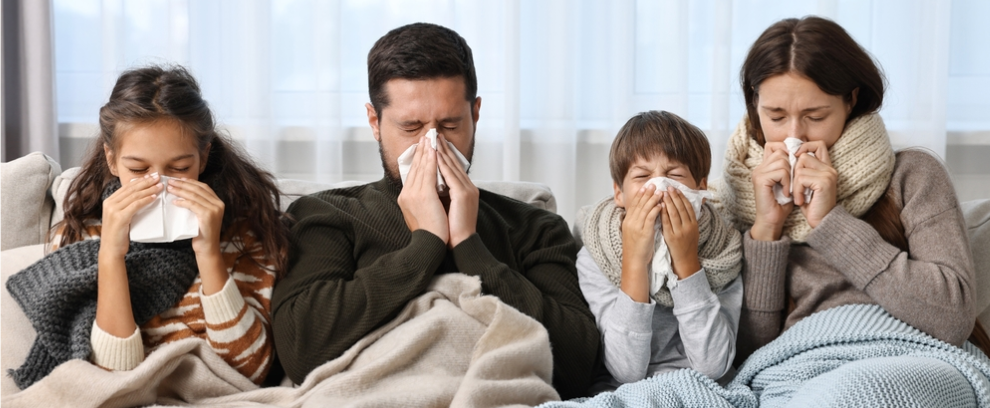
The holidays bring family gatherings, travel, school breaks and many opportunities to make memories. Unfortunately, they also increase the risk of spreading seasonal illnesses.
From flu and RSV to COVID-19 and the common cold, respiratory viruses circulate throughout fall and winter. With more time spent indoors and in closer contact with family and friends, it’s important to protect yourself and your loved ones.
The good news? A few simple habits can help reduce your risk of getting sick and spreading germs this holiday season.
What to Watch For
Several respiratory illnesses are common during the colder months. Although their symptoms can overlap, knowing what to look for can help you recognize when it’s time to seek medical care.
- Influenza (Flu): Flu often causes a sudden fever, chills, body aches, headache, fatigue, cough and a sore throat. Symptoms can range from mild to severe.
- Respiratory Syncytial Virus (RSV): RSV commonly causes cold-like symptoms, including congestion, runny nose, coughing and fever. It can be more serious for infants, older adults and people with certain medical conditions.
- COVID-19: Symptoms may include fever, cough, sore throat, congestion, fatigue, headaches and body aches. Some people also experience changes in their sense of taste or smell.
- Common Cold: Colds typically cause a runny or stuffy nose, sneezing, sore throat and mild coughing. Most people recover without medical treatment.
Because these illnesses share many symptoms, it can be difficult to tell them apart based on how you feel alone. Testing can help identify the cause and guide the appropriate treatment.
7 Ways to Protect Your Family
You do not have to avoid holiday gatherings to stay healthy. Practicing a few everyday precautions can help reduce the spread of respiratory illnesses.
- Stay Up-to-Date on Recommended Vaccinations: Talk with your health provider about seasonal immunizations, including the annual flu vaccine and the current COVID-19 vaccine. RSV immunizations are also recommended for certain infants, pregnant individuals, and older adults based on age and risk factors.
- Wash Your Hands Frequently: Wash your hands with soap and water for at least 20 seconds, especially before eating, after using the restroom, and after coughing, sneezing or blowing your nose. Hand sanitizer containing at least sixty percent alcohol is a good alternative when soap and water are not available.
- Avoid Close Contact When You’re Sick: If you or someone in your household is feeling unwell, consider skipping gatherings until symptoms improve. Stay home and away from others until your symptoms are improving overall and you have been fever-free for at least 24 hours without fever-reducing medication.
- Improve Indoor Air Quality and Flow: Respiratory viruses can spread through the air, particularly in crowded indoor spaces. Open windows when weather allows, improve ventilation, or use air purifiers with HEPA filters to help reduce airborne particles.
- Cover Coughs and Sneezes: Use a tissue or your elbow to cover coughs and sneezes. Throw used tissues away immediately and wash your hands afterward. Avoid touching your eyes, nose, and mouth with unwashed hands.
- Clean Frequently-touched Surfaces: Regularly clean commonly-touched surfaces such as doorknobs, countertops, light switches and phones.
- Prioritize Sleep, Nutrition and Hydration: Support your overall health by getting enough sleep, eating balanced meals, staying physically active, and drinking plenty of water. These habits support your immune system.
When to Seek Medical Treatment?
Most mild respiratory illnesses can be managed at home with rest and fluids. However, some symptoms need medical attention.
Consider visiting an urgent care center if you experience:
- A persistent or worsening fever
- A cough or sore throat that is getting worse
- Symptoms that improve but then return or become more severe
- Significant congestion or sinus discomfort
- Flu-like symptoms, especially if you are at high risk for complications
Early evaluation is especially important for people at higher risk of severe illness. Antiviral treatments for influenza and COVID-19 may be appropriate for certain patients. These medications work best when started early, so do not delay seeking care if you think you may be eligible.
Seek emergency medical care if you experience:
- Difficulty breathing
- Persistent chest pain or pressure
- Inability to stay awake
Enjoy a Healthier Holiday Season
The holidays should be about spending time with the people you love, not passing around unwanted germs. Staying up to date on recommended vaccinations, practicing good hygiene, and recognizing symptoms early can help keep your family healthier throughout the season.
If you or a loved one develop symptoms of a seasonal illness, our health providers are here to help. Find a location near you or schedule a visit online with Hold My Spot®.
Sources:
CDC Respiratory Illnesses, CDC Preventing Respiratory Illnesses, CDC Preventing Spread of Respiratory Viruses When You’re Sick, Mayo Clinic, Vaccinate Your Family